When Marci Penner, director of the Kansas Sampler Foundation, became aware that there was a need in Jackson County, Kansas for someone still versed in the lost Art of Wild Cast Iron Tub Wrangling & Corralling, the city of Lucas, Kansas was the obvious choice in which to search. One of the great centers of Art in the entire country, Lucas is the home of the Wild Tub Wranglers [Richard Mettlen, Tarry Dougherty, Connie Dougherty, and Von Rothenberger], last of a now rare breed of amusingly described rugged individualists willing to practice this now lost Art and drive nearly 500 miles in one day on just Cracker Jacks and a little ice cream.
So early on the morning of Friday, June 17, 2011, the expedition came together, a trailer was hitched, and it was off to the wilds of Northeast Kansas.

State Highway 18 and then north to State Highway 9 and east was the route of choice. Passing through Blue Rapids, Kansas, the Wranglers noted this unique take on RV camping.


The mural on the Whiting Cafe, in Whiting, Kansas enticed the Wranglers inside for a satisfying lunch of the fish special, cheeseburgers and cherry pie!


The inside of the Whiting Cafe is still clean and inviting three years after the Kansas Sampler Foundation-sponsored makeover of the business.

Driving on into Holton, Kansas, the Wranglers spied this sign. Naturally at first they thought that it was about them, but no, it was a normal circus . . . .

. . . and several unique animals were out enjoying the fine Kansas weather, including this unusual animal. Informed sources later told us that this critter is called a “Zedonk.” A cross between a zebra and a donkey was actually one of the guesses at the time, but unless you're talking wild cast iron bathtubs the Wranglers’ knowledge of exotic wildlife gets a bit spotty.


AHA! There, lying low at the far end of a grassy meadow, the Wranglers almost missed the rare sight of a herd of some fifteen wild bathtubs lying contentedly atop each other. The seasoned crew crept up silently alongside, backing up the trailer into position . . . .

Wrangling bathtubs is no easy task. One must calculate many things: the direction and location one will place a captured tub on one’s trailer; the weight of such a foul beast when filled with noxious water; the environmental impact directed upon oneself by ants, wasps, and other dangers all too often encountered. This is not an Art for the fainthearted!

Danger is ever present. Here Novice Wranger #3 slips and falls, correctly rolling out of the way while Veteran Wrangler #2 willingly sacrifices his life by placing himself between his fallen fellow and the infuriated tub.

A concerted effort pulls the protesting tub onto the trailer. An expert tub wrangler must be able to discern which tub is least likely to upset the rest of the herd should it suddenly find itself being pulled onto a trailer.

Once on the trailer the tub is turned on its side to expel the noxious water collected by such beasts after years in the wild.

Working as a team the Wranglers wrangle the tub into position on the trailer. Note how Seasoned Wrangler #1 directs the operation from the head of the tub - a sign of experience in such matters.

And so the operation continues over and over until the desired number of tubs is procured. Our apologies for the sudden blueness found in these photos. "Often in the wild, locations are primitive, and in the course of filming high-tech equipment tends to malfunction due to the humidity and other factors." At least that is The Standard Wildlife Documentary Excuse used in all such documentaries and we are sticking to it.

One difficulty with these tubs is that over the years they have a tendency to throw off their claw feet, which had to be found and collected for later reattachment.

Most tubs are pacified, domesticated eternal friends of Man. Kansas Man.


The sound that an infuriated cast iron bathtub makes is often described as being like metallic fingers scratching along a chalk board – only louder and more hollow-sounding. Fortunately the sound is several decibels above the hearing of a human and thus can be heard only by ants and wasps and, of course, the Narwhale.

The locally-mandated seasonal limit of seven tubs having been wrangled, it was time to corral the cast iron brutes for the long journey to their new homes. These tubs are destined for new lives as Much Stared Upon Wildly Painted Art Objects in and around Lucas , Kansas

Great care is taken not to harm the fiercely struggling beasts during the ritual "For Heavens Sake Would You Hurry Up And Tighten That Strap Before They Get Away" phase of the corralling. Again, these are Seasoned and Veteran Wranglers - do no try this at home.
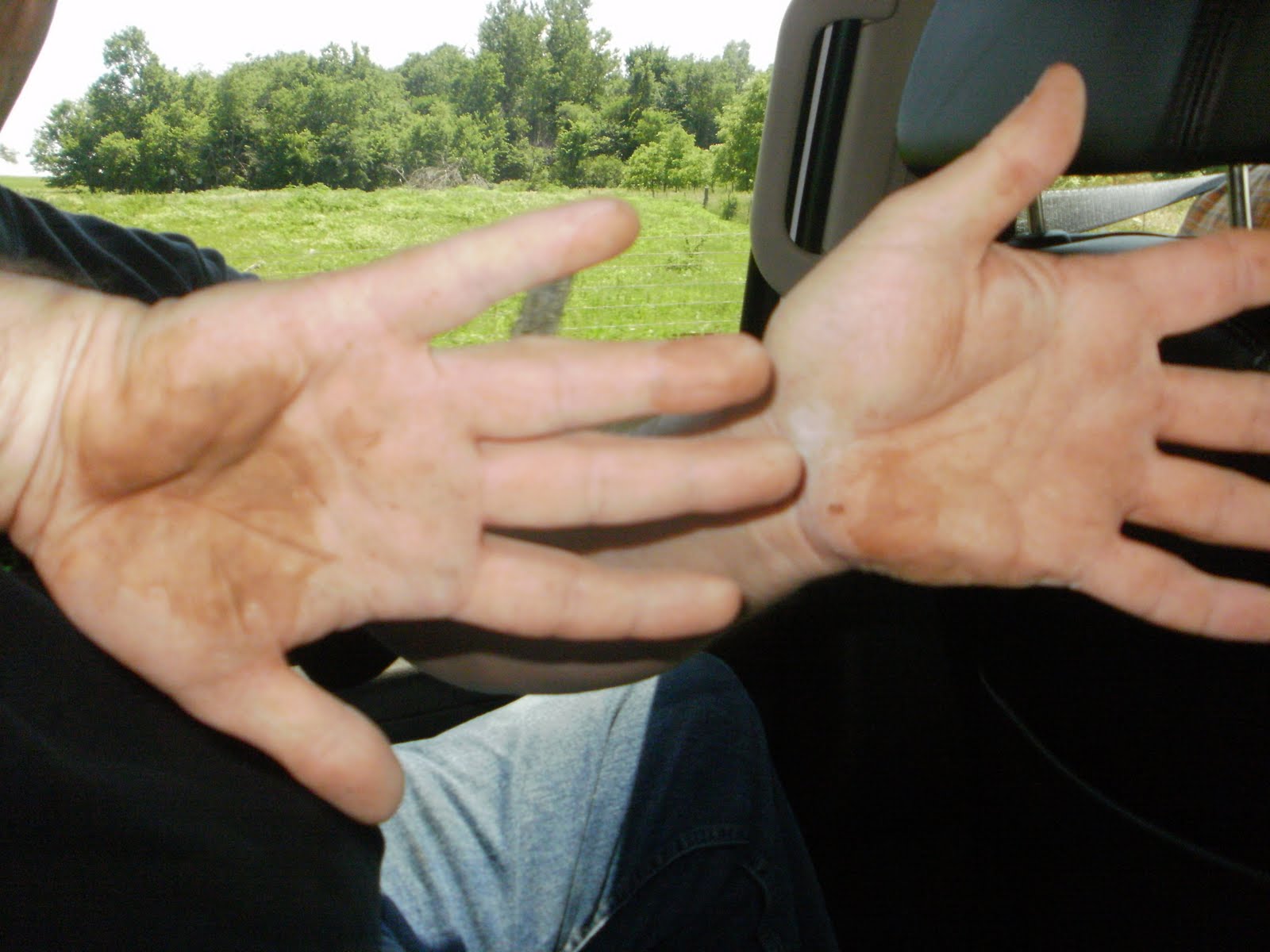
The tubs at last wrangled and corralled, the evidence of wear and tear on the tired bodies of the Wild Tub Wranglers is documented and photographed for posterity. Fortunately a Dairy Queen was discovered in nearby Holton where the Wranglers were able to clean up and be made presentable in time for obtaining rehydrating ice cream.

Tradition holds that the Novice Wrangler must carry the time honored food of the Wild Tub Wrangler Wrapup Celebration Party to the celebration's secret location in Lucas. Thus ends another thrilling adventure in the wilds of Rural Kansas!


